Search This Blog
¡Bienvenid@s!
Wednesday, October 2, 2013
Bilingual Learning - Aprendizaje bilingüe
The video is powerful in the images it shows of kids having fun learning a new language and of the science behind the bilingual brain.
In the "dilemma" part two Latino families talk about their experiences about sending the kids to Bilingual schools: one was successful, the other one, a failure. And I add that the same experience have the families who want to implement the language at home, because just the fact that the parents speak the language is not a guarantee for success.To be successful there is the need of a plan: who and when will speak the language to the baby, and for how long? All of those are questions that parents need to face if they are serious about bringing up the baby to be bilingual. If you don't put the time and energy to the task, it won't happen.
Encontré este video gracias a Marcela Summerville de Spanish Workshop for Children en Philadelphia. Es un video hecho por 89.3 KPCC: "La ciencia, las opciones y el dilema de la educación dual" relacionado con las muchas escuelas bilingües en Los Ángeles.
El video posee imágenes poderosas de niños divirtiéndose mientras aprenden una nueva lengua y de la ciencia que hay detrás del cerebro bilingüe.
En la parte llamada "Dilema" se muestran dos familias latinas que hablan de sus experiencias en mandar a los chicos a las escuelas bilingües. Una tuvo una buena experiencia, la otra no. Yo agregaría que la misma experiencia van a tener las familias que quieren implementar el español en casa, porque el hecho de que los padres hablen la lengua no garantiza el éxito. Para tener éxito hay que planear: quién (o quiénes) y cuándo se comunicarán en español con el bebé, y por cuánto tiempo. Todas estas preguntas necesitan respuestas si la familia es seria en su intención de criar chicos bilingües. Si no se pone el tiempo y se dedica energía a la tarea, lamentablemente no va a suceder.
Foto: Cortesía de Javier Franzony en Flicker, bajo una licencia de Creative Commons.
Friday, September 20, 2013
Los mitos del bilingüismo. Para detenernos a pensar - Myths of bilingualism. Let's stop and think
Acabo de leer este artículo de Francois Grosjean sobre los mitos del bilingualismo y ¡me siento mucho mejor! Me doy cuenta de que inconscientemente yo asumía que si uno era bilingüe tenía que tener un perfecto dominio de ambas lenguas, y parece que no es así. Me interesa su perspectiva especialmente porque él mismo es bilingüe, de madre inglesa y de padre francés.
Francois Grosjean es profesor en la Universidad de Neufchatel, en Suiza. Su último libro habla de todas estos conceptos erróneos que la gente tiene sobre el bilingüismo: Bilingual, Life and Reality, publicado en Harvard University Press. Ya lo pongo en mi lista.
Photo by Steven Spell.
I've just read this article by Francois Grosjean about some myths regarding bilingualism, and I felt so much better! I realize that unconsciously I believed that a bilingual person has to have a perfect command of both languages, and it looks it is not the case. I am interested in this perspective because he himself is a bilingual from an English speaking mother and a French speaking father.
Francois Grosjean is a Professor at University of Neufchatel, in Switzerland. His last book talks about the wrong ideas that surround bilingualism: Bilingual Life and Reality, published by Harvard University Press. It is already in my To Read list.
Friday, July 5, 2013
Duérmete mi niño... Sleep tight my child
Beautiful article by Carlos Silveyra, Sleep tight my child... Recovering nursery rhymes published in Alija's magazine (Argentina Children and Youth Book Association). It complements wonderfully Gabriela Golder's project, Arroró.
What a strong attraction these songs own! We talked with the bilingual group to make a video singing the songs we sing to our kids to make them sleep. I wrote to Gabriela about the idea and she was excited about it. It is time to do it...
Wednesday, June 19, 2013
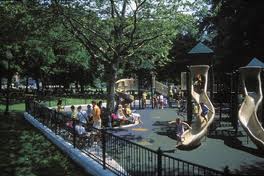
Jugando en el parque
![]() |
Picture from http://ziptivity.wordpress.com/2011/05/12/playground-fun-in-boston/
Friday, February 15, 2013
La importancia de aprender idiomas, vía Les Luthiers
Friday, January 18, 2013
The Importance of Being Bilingual
Sunday, January 15, 2012
Eddie Izzard: Being Bilingual
The British comedian Eddie Izzard talks about the importance of being bilingual, but before that he makes very funny comments about the differences between the British and the American English.
Thursday, June 9, 2011
El día del español
Armé una nube de palabras con Wordle de las que han sido seleccionadas y este es el resultado:
Mi palabra preferida es susurrar porque es una palabra suave y sedosa que parece tener un eco.
¿Y tu palabra favorita cuál es?
Wednesday, January 12, 2011
María Elena Walsh
María Elena Walsh acaba de morir, y con ella siento que muere una parte de mi infancia. La conocí, es decir, conocí su obra a través de " Zoo Loco", cuando tenía cinco añitos. Me encantaban esos poemas de animales, tan alocados, tan sinsentido y al mismo tiempo tan superlógicos, dentro del mundo de la imaginación.
Aquí van algunos ejemplos de estos poemas divertidos. Años más tarde me enteré de que se llamaban limericks.
Una vaca que come con cuchara
y que tiene un reloj en vez de cara,
que vuela y habla inglés,
sin duda alguna es
una vaca rarísima, muy rara.
Un gato concertista toca Liszt,
una lechuza va y le dice: -Chist,
me aburres por demás,
cambia ya de compás
que tengo ganas de bailar el twist.
Un gallo a una gallina preguntó:
¿Cocorocó? ¿Cocorocó cocó?
la gallina, indecisa,
primero le dio risa,
pero después le contestó que no.
Parece que en Japón había un mono,
Que dormía la siesta con kimono.
- Qué cosa rara es
- decía un japonés
- ver a un mono en kimono haciendo nono.
Encontré un video del gato concertista. Creo que necesitan tener cuenta en facebook para verlo.
Monday, October 4, 2010
If you are Latino you speak Spanish, right? Wrong!
I want to have a garden. Every winter I fantasize in all the carrots, beans, and eggplants I will tend during spring and summer. Truth is I barely manage to get some decent tomatoes in a big pot. I know why my returns are so paltry: I don't plan in advance preparing the soil, getting the seeds, watering as needed. Fortunately, I did plan my kids path to bilingualism so in that respect I was able to get a good harvest.
Ana Lomba, Spanish teacher, advocate, and instruction material creator, wrote a list of obstacles Native speakers parents meet when trying to pass their language along to their children. According to the article, every parent and even parents with an Ivy-league degree make the following mistakes:
1. Lack of planning.
2. False assumptions.
3. Unrealistic expectations.
You can read the article here.
In the article, Ana explains how to avoid those mistakes. I would like to add my piece of advice.
How to achieve success.
I define success as having children who are able to communicate fluently in Spanish, with different degrees of proficiency in their four abilities: talking, listening, writing and reading. In my experience as a bilingual parent and a Spanish teacher, the most successful parents are the parents who speak in the language to their children. Excuse me, I made a mistake, a BIG mistake, let me rephrase the previous sentence: Success come to the parents who speak WITH their children in their native language. What I mean is that being able to have a meaningful interaction is key. And here we get into a delicate path. We are entering in the parenting-in-general realm, not just passing-along-a-language zone. I have seen many parents who talk in Spanish to their kids but do not engage them into a conversation. They just tell them to do something, ask them questions, give them orders in Spanish, or try to teach them colors, numbers, body parts with no context al all. It looks like their kids is a tabula rasa, an empty vessel in which we pour our wisdom. It is a one way conversation, if at all, because there is no communication. This is a parenting style that is not conducive to learning a language. What helps the kids to learn a language is to be engaged in an activity, in a game, when there is dialogue (and you can have a dialogue even if the baby doesn't talk back.) Real communication entails at least two people actively listening and talking with each other.
Now, if these families were living in a Spanish speaking country, the environment would take care of the kids learning to communicate in Spanish: family, friends, school, the media, all that surrounds the child is in Spanish, the language stimuli come from many sources, the need to communicate permeates their world. The Spanish speaking families living in an English environment will have to double their efforts to get their kids to be fluent in Spanish. So, when Ana Lomba talks about planning, sometimes this planning has to do with changing parental habits.
This is why I created the Bilingual Mamis y Papis Meet Up a year ago. It is important that parents realize that they have to make an extra effort in getting their kids to speak Spanish. The group provides them with a place to voice their concerns, to practice their Spanish, to share what they are doing to maintain the language at home and to receive information about what others have done and worked.
Families need to know that they are not alone in their path to bilingualism.
Tuesday, May 18, 2010
Graciela Montes y su ratón feroz

Friday, May 14, 2010
¡Qué emoción!!!!
¡Hay dos personas que me siguen en el blog!!! Hi!!! I feel like flying in the sky! I feel powerful! I feel like an idiot with so many exclamation points. (There, I had to restrain myself to not add one at the end of the previous sentence.)Monday, May 10, 2010
La ventaja de formar un grupo de padres bilingües
Tuesday, May 4, 2010
Recursos en Estados Unidos. Música. Abbasubi.
Monday, April 12, 2010
Pochita Morfoni y otras yerbas
Thursday, April 1, 2010
¿Qué es literatura, entonces? Para seguir pensando...
Tuesday, March 30, 2010
Maestras que apoyan el bilingüismo
It’s a great idea to share with your children’s teachers the reasons why you’ve decided to go the bilingual way. If they seem to be unfamiliar with this topic or don’t sound too enthusiastic about it, maybe you can explain some of the benefits—not everyone is aware of them—or help dispel some of the myths.
Thursday, March 11, 2010
Gracias a otra bloguera...
Tuesday, September 1, 2009
Caracachumba
http://www.caracachumba.com.ar/nosotros.htm
Gabriela Golder y su Proyecto Arrorró
Algo que me parece muy interesante es lo que cuenta Gabriela en el video de que en muchas de las canciones latinoamericanas se da la temática de la madre sola pidiéndole al niño que se duerma, y el padre lejos, trabajando en el campo. Aparentemente, no aparece esto en canciones de cuna de otras partes del mundo. Esta idea es valiosa para mí porque en este camino de transmitir el español y su cultura a nuestros hijos, estamos pasando también una cosmovisión, una forma de ver y entender el mundo. Y por eso es importante, creo yo, cantarles canciones a los niños que sean el resultado de una creación original, y no solamente traducciones al español de canciones escritas en otras lenguas.
¿No sería lindo grabar las canciones de cuna que sabemos?
In my Welcome post I wrote about the project of compiling nursery rhymes. Today I found this video of Gabriela singing "arroró" and talking about the project and its beginnings.
Something that I find interesting is what she tells in the video about a common thread in many Latin American songs: the mother, alone at home with the baby, asking the child to go to sleep, while the father is away, usually working in the field. To pass along a language is to pass along also a way to see and understand the world, and that is why I believe that when we sing to children in Spanish it is important to offer them real songs and not only translations into Spanish of songs written in other languages.
Wouldn't it great to record the nursery songs that we know?